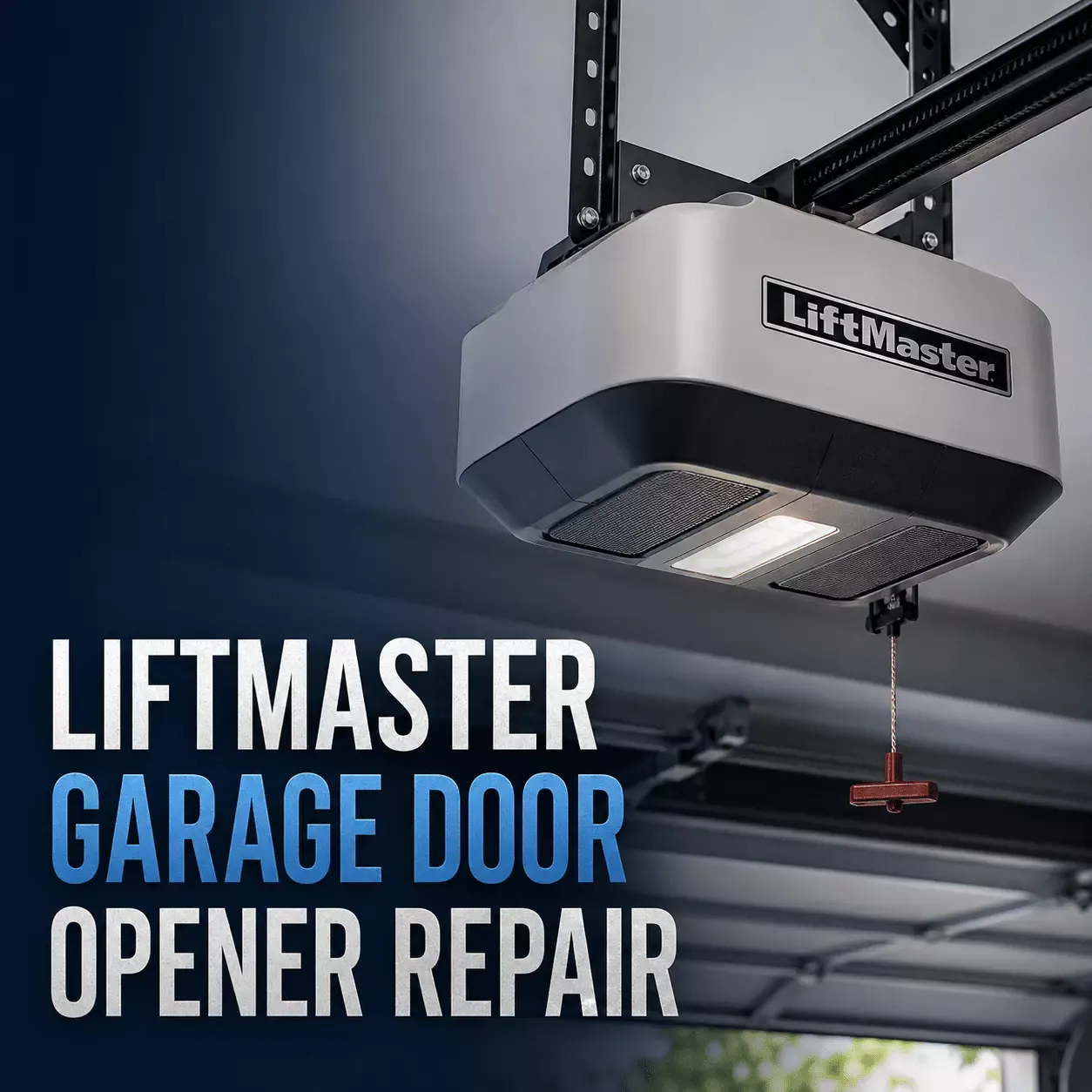
A garage door that quits on you is one of those small problems that wrecks a whole morning. The good news is that most LiftMaster openers fail for simple, fixable reasons. Before you pay for anything, a few checks often get the door moving again.
Here is where to start. Most LiftMaster garage door opener repair comes down to five things. Power, safety sensors, the remote, travel, and force settings, or worn mechanical parts.
Run through them in that order. Reset the power, clean and align the sensors, then check the remote battery. If the door still acts up, the settings or the motor may need a pro.
The rest of this guide walks through each one in plain words. Start at the top and work down.
Step 1: Check the Power
Sounds basic, but power is the top cause. A dead opener often just lost its supply.
Make sure the unit is plugged in fully. Check that the breaker did not trip. Try a quick power reset, unplug it, wait 30 seconds, then plug it back in.
That reset clears a lot of minor glitches. Test the door once more before moving on.
Step 2: Look at the Safety Sensors
This is the most common LiftMaster problem by far. The door starts to close, then reverses and goes back up.
The two small sensors near the floor must face each other. Dirt, spider webs, or a small bump knocks them out of line. Wipe the lenses and nudge them until both lights stay steady.
If only one light is on, they are misaligned or blocked. Realign them, and the door should close. Our sensor repair page covers this in more detail.
Step 3: Fix the Remote or Wall Button
If the wall button works but the remote does not, start with the battery. Most LiftMaster remotes use a 3V coin battery.
A fresh battery fixes it more often than people expect. If a new battery does not work, the remote needs to be reprogrammed to the opener. Hold the Learn button on the motor unit, then press the remote.
If the wall button is dead too, check the wires at the button terminals. Frayed wires cause button failures and need attention.
Step 4: Adjust Travel and Force Settings
Over time, the travel and force settings can drift. When they do, the door stops short or reverses for no reason.
Travel limits tell the motor how far to move the door. Force settings tell it how hard to push. If they are off, the motor thinks it hit something and backs off.
These dials sit inside the motor head. Setting them wrong is unsafe, so this is a smart point for LiftMaster troubleshooting help from a pro.
What the Blinking Light Codes Mean
LiftMaster openers flash the LED to tell you what is wrong. The number of blinks points to a specific fault.
Two flashes usually mean the safety sensors are blocked or out of line. Five flashes often mean the motor is overheating or the RPM sensor has failed. Ten flashes point to a force setting that needs adjusting.
Tip: film the blink pattern on your phone before you call. It gives the tech a head start. Blink codes can vary by model, so check the label inside the motor cover too.
Quick Facts
| Topic | Quick Answer |
|---|---|
| First things to check | Power, sensors, remote, travel and force settings, mechanical wear |
| Most common problem | Door reverses on close due to misaligned safety sensors |
| Power reset | Unplug, wait 30 seconds, plug back in to clear glitches |
| Remote not working | New 3V coin battery first, then reprogram with the Learn button |
| Blink codes | 2 flashes sensors, 5 flashes motor or RPM, 10 flashes force setting |
| Motor runs, door still | Reconnect the emergency release cord or check for a stripped gear |
| Safe to DIY | Sensors, batteries, resets |
| Call a pro for | Motor, circuit board, gears, springs, cables |
| Opener lifespan | About 10 to 15 years with regular upkeep |
| Fort Myers help | Certified LiftMaster dealer, same-day and 24/7, licensed since 2009 |
When the Motor Runs but the Door Will Not Move
Sometimes you hear the motor, but the door sits still. Two things usually cause this.
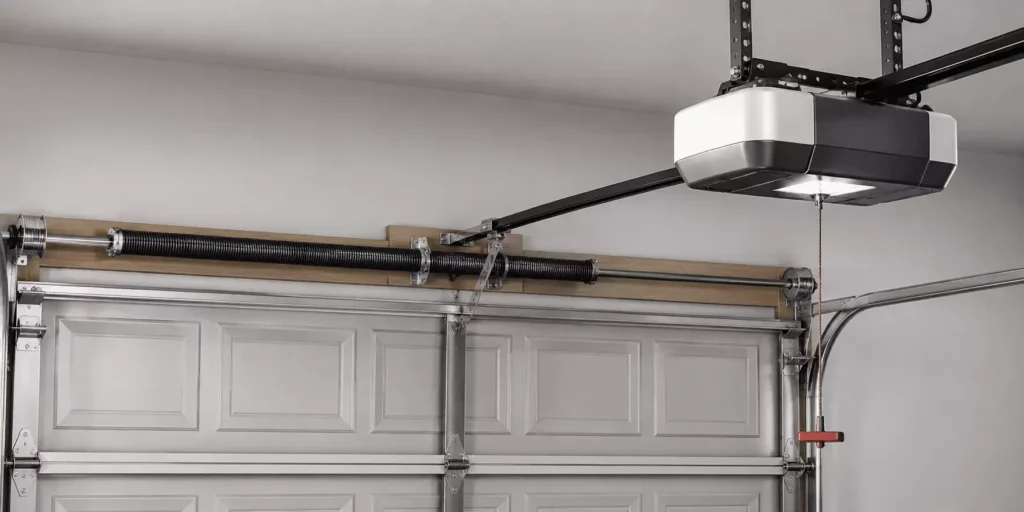
First, the red emergency release cord may have been pulled. That disconnects the door from the trolley. Reconnect it and test again.
Second, on older units, the main drive gear can strip out. That is a real LiftMaster repair job and best left to a tech. Forcing it makes the damage worse.
When to Call a Fort Myers Pro
Some fixes are simple. Sensors, batteries, and a power reset are fair game at home. Motor faults, circuit boards, stripped gears, and spring or cable trouble are not.
Our team handles garage door opener repair in Fort Myers for all LiftMaster models. We are a certified LiftMaster dealer, Florida licensed, and insured, serving Lee County since 2009.
If the door problem turns out to be a spring or track issue, we fix that on the same visit. Stuck after hours? Our 24/7 emergency line never closes.
Frequently Asked Questions
Why is my LiftMaster opener light blinking?
The blink count is an error code. Two flashes usually mean a sensor issue, so clean and realign the sensors first.
My LiftMaster remote stopped working. What do I do?
Start with a fresh 3V coin battery. If that fails, reprogram the remote using the Learn button on the motor unit.
Why does my LiftMaster door reverse right after closing?
This is almost always the safety sensors. Make sure they are clean, lined up, and free of any blockage.
How do I reset my LiftMaster garage door opener?
Unplug the unit, wait 30 seconds, then plug it back in. This clears most minor glitches and error codes.
The motor runs, but the door will not move. Why?
The emergency release cord may have been pulled, or the drive gear is stripped. Reconnect the cord first, then call a pro if it persists.
How long does a LiftMaster opener last?
A well-maintained LiftMaster opener lasts about 10 to 15 years. Twice-a-year maintenance helps it reach the high end.
Can I repair a LiftMaster opener myself?
Sensors, remotes, and resets are safe to try. Leave the motor, circuit board, springs, and cables to a trained tech.