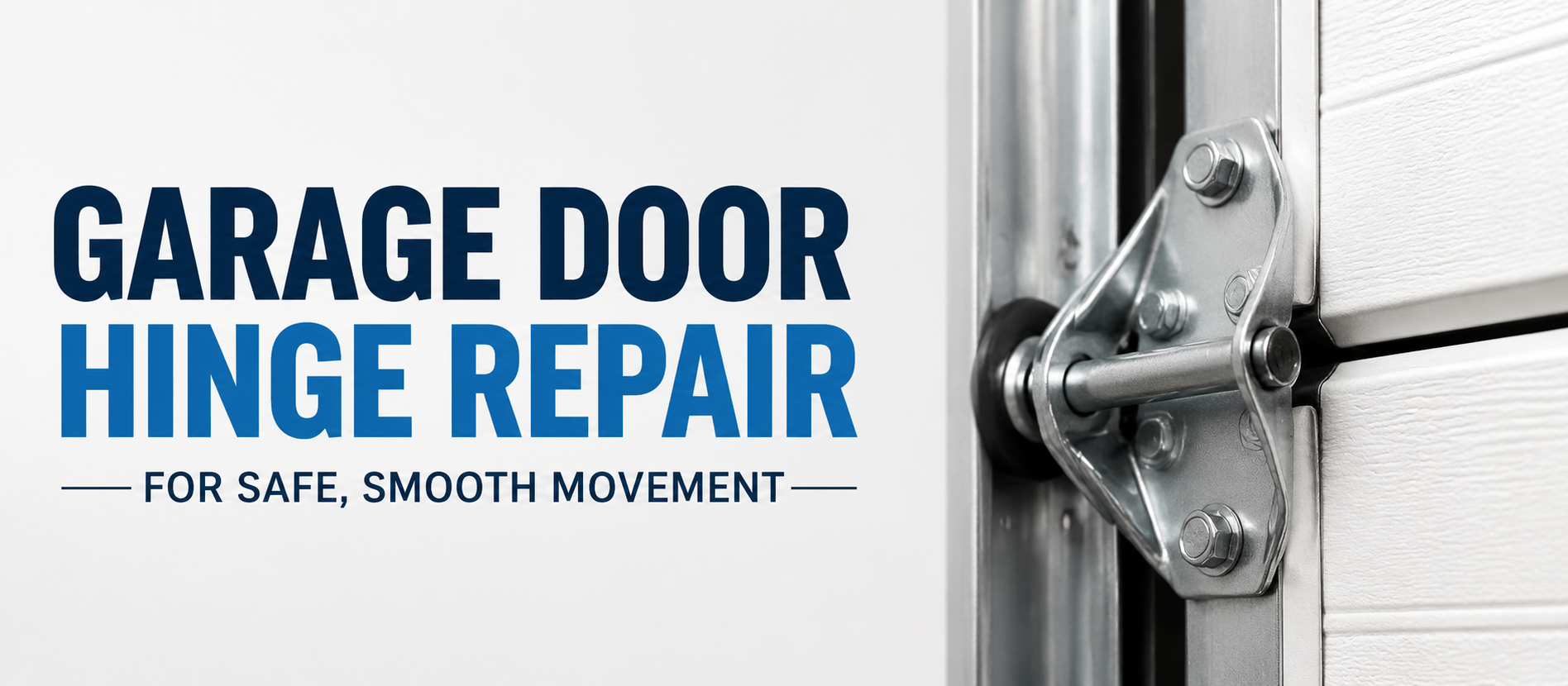
Most folks never think about the little hinges holding their garage door together. Then one starts squeaking or cracking, and the whole door starts moving incorrectly. The good news is that garage door hinge repair is one of the more straightforward fixes, as long as you respect a few safety rules.
Here is the short version. To fix a garage door hinge, you replace the worn one with a matching numbered hinge of the same gauge.
Work with the door closed and the opener disconnected. Swap one hinge at a time, then lubricate the pivot points. The tricky part is matching the hinge number and gauge correctly.
The sections below walk through it all in plain words. Read on so you get it right the first time.
What Garage Door Hinges Actually Do
A quick bit of background helps here. Hinges are the metal pieces that connect your door’s panels. A typical door has four or five panels held together this way.
They let the door bend as it rolls up and down the track. Many hinges also hold the rollers that ride on the track. So when a hinge fails, the door binds, sticks, or moves unevenly.
That extra strain then wears on the panels and tracks. A small hinge problem can grow into a big one fast.
Quick Facts
| Topic | Quick Answer |
|---|---|
| What hinges do | Connect the door panels and hold many of the rollers |
| Top warning signs | Squeaking, cracks, rust, loose screws, uneven panel gaps |
| Why they break | Metal fatigue, rust, impact, missing lubrication, thin gauge |
| Hinge numbers | Stamped 1 to 5 on residential doors, match number to position |
| Gauge rule | Lower number means thicker and stronger, 14 gauge is standard |
| Repair basics | Door closed, opener off, swap one hinge at a time, then lubricate |
| Safety warning | The bottom bracket is under spring tension, leave it to a pro |
| Hinges and rollers | Often best replaced together |
| Make them last | Yearly inspection and light lubrication, more often near the coast |
| Fort Myers help | Same-day and 24/7 hinge and hardware repair, licensed since 2009 |
Signs Your Hinge Needs Repair
Hinges usually warn you before they fail. Watch for these signs on your door.
You hear squeaking or grinding when the door moves. A hinge shows visible cracks, rust, or bent metal. Screws look loose or have gone missing.
The panels no longer line up, with uneven gaps along the seams. The door catches or jerks as it travels. Any one of these means it is time for a closer look.
Why Hinges Break
Hinges fail for a few common reasons. Knowing the cause helps you prevent the next one.
Metal fatigue from years of cycling is the top reason. Rust and corrosion follow close behind, which matters near the coast. A heavy impact, like a bumper or a ladder, can crack one, too.
Skipping lubrication also speeds up wear. So, can using hinges that are too thin for the door? The right gauge makes a real difference.
Understanding Hinge Numbers and Gauge
This is the part most people get wrong. Garage door hinges are stamped with a number.
Residential doors use numbers one through five. The center hinges are usually number one. The numbers rise as you move toward the edges, so you must match the number to its position.
Gauge is the other key detail. It works backward, so a lower number means thicker, stronger metal. Most residential doors use 14-gauge hinges, while commercial doors use heavier 11 gauge.
How a Hinge Repair Works
Here is how the fix goes, step by step. Read it so you know what the job involves.
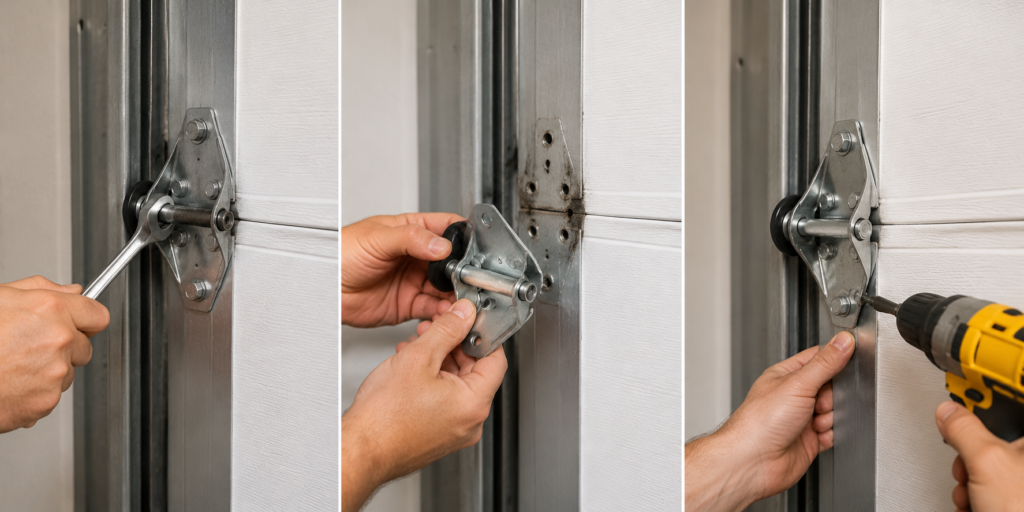
First, disconnect the opener and pull the release cord so the door cannot move. Keep the door closed for this. Remove the screws on the bad hinge, usually two to four 7/16 inch screws.
Then fit a matching numbered hinge and tighten the screws snugly, not too hard. Do only one hinge at a time so the panel stays supported. Lubricate the new hinge, then test the door by hand before reconnecting power.
A Quick Word on Safety
Hinges look simple, and most are. The center hinges are fine for a careful homeowner. The catch is the bottom bracket.
The bottom bracket is under heavy spring tension, just like the cables. Do not treat it like a regular hinge. That one is a job for a pro, since a loaded spring can cause serious injury.
When to Call a Fort Myers Pro
Call a pro if several hinges are worn, the panels are misaligned, or a bottom bracket is involved. Also, call if the door binds after a hinge swap.
Our team handles residential garage door repair in Fort Myers, including hinges, rollers, and brackets. We are Florida-licensed and insured, serving Lee County since 2009.
If worn hinges have already damaged a panel or roller, we handle that on the same visit. Stuck after hours? Our 24/7 emergency line stays open.
Frequently Asked Questions
How do I know which garage door hinge to buy?
Check the number stamped on the old hinge, usually one through five. Match both the number and the gauge to keep the door aligned.
Can I replace a garage door hinge myself?
Yes, the center hinges are manageable with care. Keep the door closed, disconnect the opener, and do one at a time. Leave the bottom bracket to a pro.
Why is my garage door hinge squeaking?
Dry or worn pivot points are the usual cause. Lubricate the hinge first, and replace it if the squeak stays or you see cracks.
What gauge hinge do I need?
Most residential doors use 14-gauge hinges. Remember, a lower gauge number means thicker, stronger metal.
Should I replace hinges and rollers together?
Often yes, since they work as a pair and wear at a similar rate. Doing both at once saves a second job later.
What happens if I ignore a broken hinge?
The door binds, and the strain spreads to the panels and tracks. A cheap hinge fix can turn into a costly panel repair.
How long do garage door hinges last?
With lubrication and care, hinges last many years. Coastal salt air shortens that, so inspect them once a year.