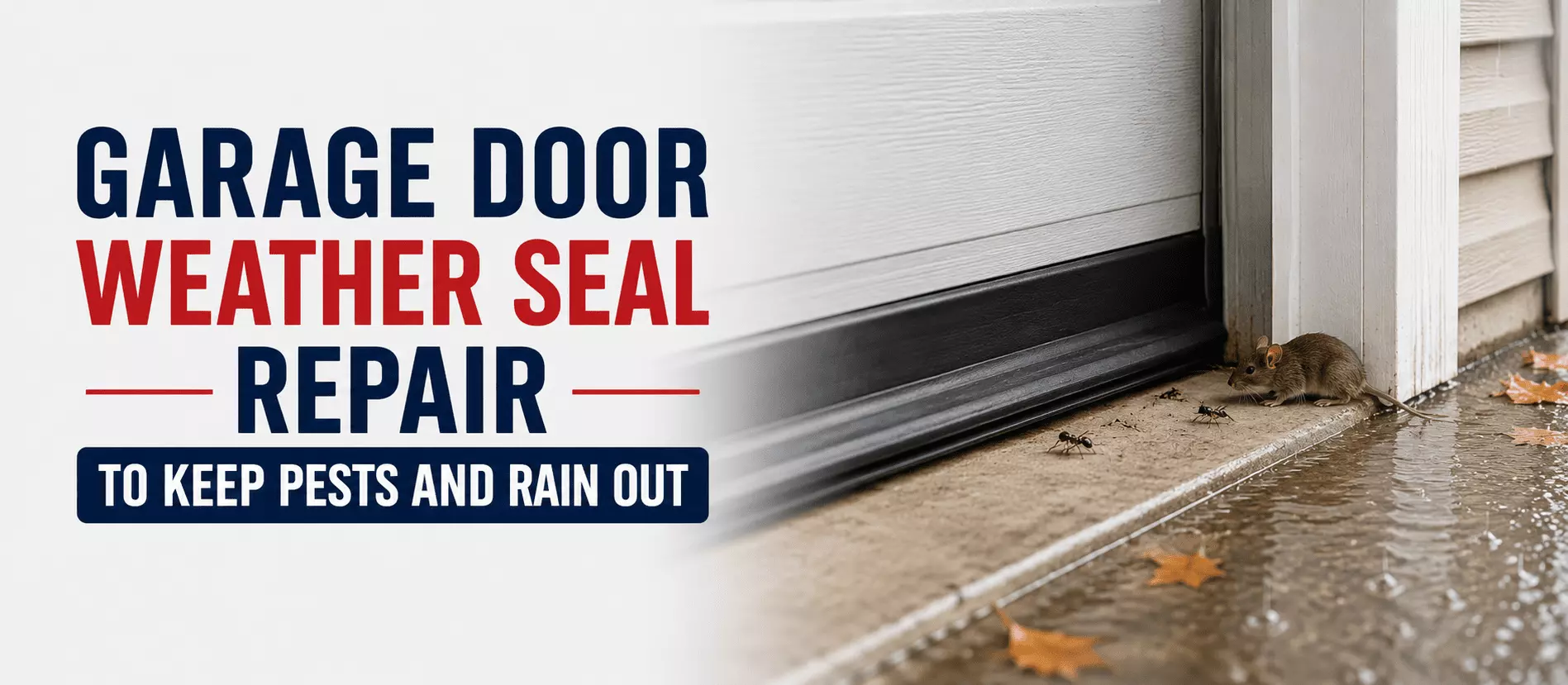
Garage Door Weather Seal Repair to Keep Pests and Rain Out
You notice it after a heavy Florida rain, a wet patch creeping under the garage door. Maybe it is bugs or heat pouring in by midday. A cracked weather seal is usually the reason, and the fix is simpler than you think.
Let us get right to it. Most garage door weather seal repair means swapping the worn strip for a fresh one.
Measure your door width and check the retainer style first. Slide out the old seal, slide in a matching new one, and you are done. The catch is matching the seal profile to your retainer.
The sections below break it all down in plain words. Read on so you order the right part.
What a Weather Seal Does
A quick bit of background helps here. The weather seal is the rubber or vinyl strip around your door’s edges.
It closes the gaps where the door meets the floor, the sides, and the top. That barrier keeps out rain, dust, drafts, and pests. It also helps hold cooler air inside the garage.
In Fort Myers, that last part matters most. A good seal blocks the heat and humidity that drive up your power bill.
Quick Facts
| Topic | Quick Answer |
|---|---|
| What it does | Seals gaps at the bottom, sides, and top against rain, pests, and heat |
| Top warning signs | Daylight under the door, water, bugs, cracked or flat rubber |
| Main seal types | Bottom seal, side and top perimeter seals, floor threshold seal |
| Match first | The retainer profile, T-style, bulb, or bead, plus door width |
| Do not rely on | The door model number alone, seals vary by retainer |
| Repair basics | Slide old seal out, clean the groove, feed new seal in, trim to width |
| Replace how much | The whole strip at once for an even seal |
| Seal lifespan | 5 to 10 years, shorter in coastal heat and salt |
| Safe to DIY | A simple bottom seal swap |
| Call a pro for | Bent retainer, uneven door, or gaps that keep returning |
| Fort Myers help | Same-day and 24/7 seal and weather strip repair, licensed since 2009 |
Signs Your Seal Needs Replacing
A worn seal gives clear warnings. Watch for these around your door.
You see daylight under the door when it is closed. Water, leaves, or dirt blow in during storms. You spot bugs or even small rodents getting through.
The rubber looks cracked, flattened, or torn. The garage feels hot and muggy fast. Any one of these means the seal has given out.
The Main Types of Seals
Knowing the parts helps you fix the right one. A door has a few seals working together.
The bottom seal is the big one, a long strip that presses against the floor. Side and top seals, also called perimeter seals, close the edges. A threshold seal sits on the floor itself for extra protection in heavy rain.
Each one handles a different gap. Often, only the bottom seal needs replacing, since it takes the most wear.
Match the Retainer Profile First
This is the part people get wrong. The bottom seal slides into a track called the retainer.
Retainers come in a few shapes, like T-style, bulb, and bead. Your new seal must match that shape to fit. Do not trust the door model number alone, since seals vary even on the same model.
The safe move is to pull out a short piece of the old seal. Look at the end shape, then match it. Measure the door width too, so you buy enough length.
How a Seal Repair Works
Here is how the fix goes, step by step. Read it so you know what the job involves.
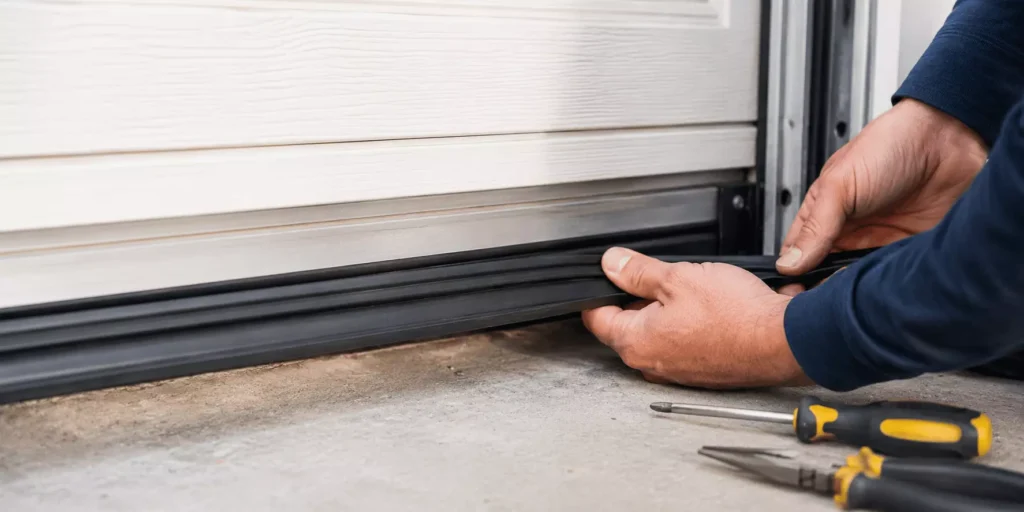
First, open the door partway to reach the bottom retainer. Slide the old seal out from one end of the track. Clean the retainer groove of dirt and grit.
Then feed the new seal in, working it along the full track. Trim it to the door width with a sharp knife. Close the door and check for a snug, even press against the floor.
A Note on Fort Myers Heat and Salt
Coastal weather is hard on seals. Sun, salt air, and humidity break down rubber faster here.
Standard seals can last five to ten years inland. Near the coast, plan to check yours more often. Replace the whole strip at once, even if only part looks worn, for an even seal.
When to Call a Fort Myers Pro
A simple bottom seal swap is fine for a handy homeowner. A bent retainer, an uneven door, or gaps that keep coming back are not.
Our team handles residential garage door repair in Fort Myers, including seals, retainers, and weather strips. We are Florida-licensed and insured, serving Lee County since 2009.
If the gap is from a panel or track problem, we fix that on the same visit. Stuck after hours? Our 24/7 emergency line stays open.
Frequently Asked Questions
How do I know if my garage door seal needs replacing?
Look for daylight, water, or bugs getting under the closed door. Cracked, flat, or torn rubber means it is time for a new seal.
How do I pick the right replacement seal?
Measure your door width and check the retainer shape, like T-style, bulb, or bead. Match that profile, since the model number alone is not enough.
Can I replace just the seal and keep the retainer?
Yes, if the retainer is in good shape. Slide the old seal out and slide a matching new one in.
How long does a garage door weather seal last?
Most seals last five to ten years. Fort Myers sun, salt, and humidity shorten that, so check yours more often.
Why is water still coming in after a new seal?
The seal profile may not match, or the floor is uneven. A threshold seal on the floor can help in heavy rain.
Can a weather seal keep pests out?
Yes. A tight bottom and perimeter seal blocks the gaps that bugs and small rodents use to get in.
Does a garage door seal help with heat?
It does. A good seal slows the hot, humid air that raises your power bill, which matters a lot in Florida.