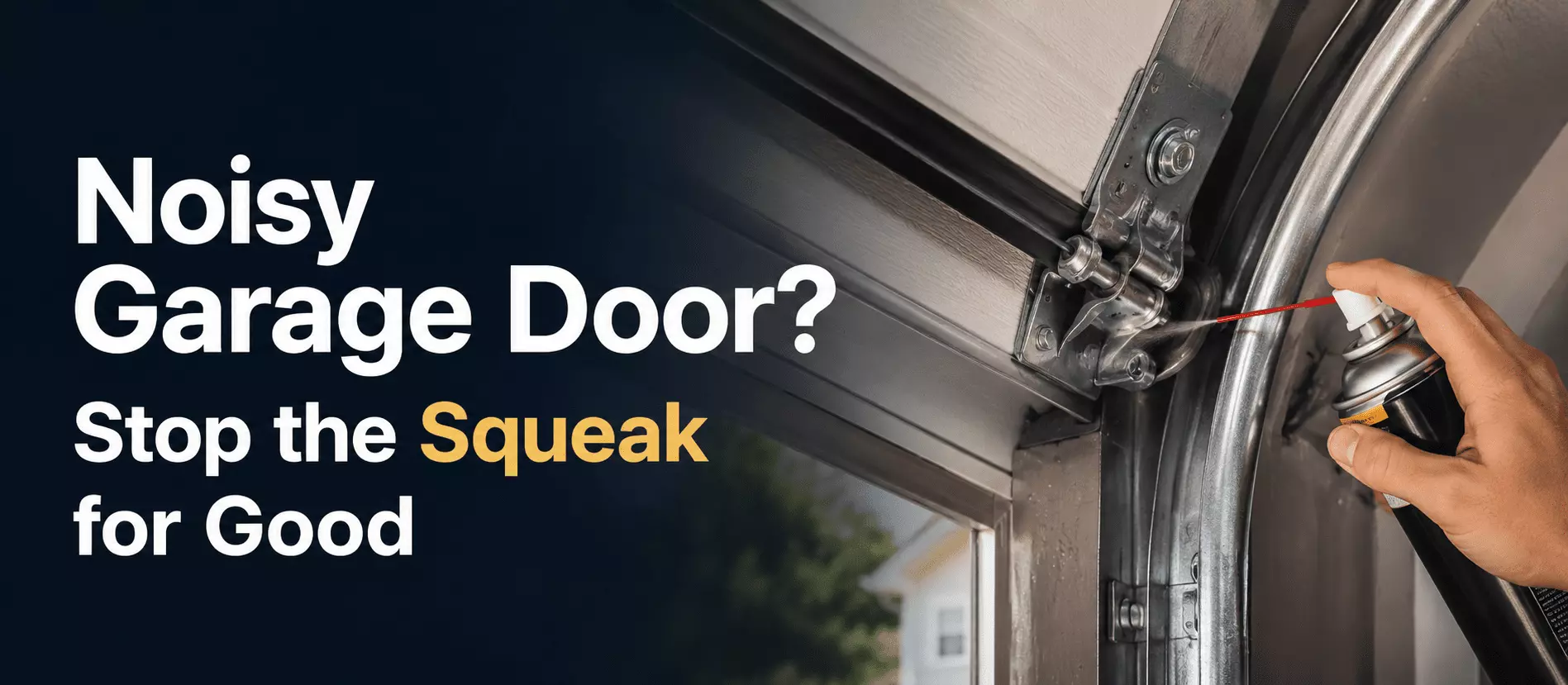
That awful screech every time the garage door opens can set your teeth on edge. Worse, your whole house hears you come and go. The good news is that most garage door squeak repair takes nothing more than a cloth, the right lubricant, and a few minutes.
The Quick Answer First
Let us get right to it. A squeaky door almost always means dry, metal-on-metal parts.
Clean the tracks, then lubricate the rollers, hinges, and springs with a silicone or lithium spray. Tighten any loose nuts and bolts while you are at it. That combo silences most doors fast.
The sections below break it all down in plain words. Read on so you fix it the right way.
Quick Facts
| Topic | Quick Answer |
|---|---|
| Main cause of squeaks | Dry, metal-on-metal rollers, hinges, and springs |
| Sound guide | Squeak means dry parts, grind means worn rollers or track, bang means a spring |
| Step 1 | Clean the tracks of dirt and old grease, do not lubricate the track surface |
| Step 2 | Lubricate with silicone spray or lithium grease, never WD-40 |
| Step 3 | Tighten loose nuts and bolts, never touch the spring bolts |
| Worn rollers | Plastic wears in 2 years, steel rusts, nylon is quietest at about 10 years |
| Florida note | Lubricate every 6 months, salt air speeds up rust |
| Safe to DIY | Cleaning, lubricating, tightening hardware |
| Call a pro for | Worn rollers, spring noise, track alignment, opener grinding |
| Fort Myers help | Same-day and 24/7 roller and noise repair, licensed since 2009 |
Listen to the Sound First
The noise itself tells you a lot. Each sound points to a different cause.
A squeak or screech usually means dry rollers, hinges, or springs. A grinding sound points to worn rollers or a misaligned track. A rattle means loose hardware or debris.
A loud pop or bang is the serious one. That can mean a broken spring, so stop and call a pro. The rest are usually easy fixes.
Step 1: Clean the Tracks
Start before you grab any lubricant. The tracks need to be clean first.
Wipe the inside of both tracks with a damp cloth. Clear out dirt, leaves, and old grease buildup. Grit in the track makes rollers grind and squeak.
Do not lubricate the track surface itself. The rollers need grip there, not slick coating.
Step 2: Lubricate the Right Way
This is the step that fixes most squeaks. Use the right product, though.
Skip WD-40, since it is a cleaner, not a true lubricant. Reach for a silicone-based spray or white lithium grease instead. Hit the rollers where they meet the track, then the hinges and springs.
A light coating is plenty, not a dripping mess. Wipe off the excess with a cloth. Run the door a few times to spread it.
Step 3: Tighten Loose Hardware
A rattling, shaking door usually has loose hardware. Daily use slowly vibrates bolts loose.
Work around the door with a socket set. Check every nut, bolt, and bracket, especially the hinges. Snug them up, but do not overtighten, or you will strip the threads.
One key warning here. Never adjust the bolts on the springs, since those are under heavy tension. That part is a pro job.
Check the Rollers
Still squeaking after lubrication? Worn rollers are the likely cause. They take the most wear of any moving part.
Look for cracks, flat spots, or a roller that wobbles. Plastic rollers wear out fast, often in a couple of years. Steel rollers last longer but can rust and get noisy.
Nylon rollers are the quietest choice and can last around ten years. Swapping worn rollers for nylon makes a loud door whisper-quiet.
Why Florida Doors Get Noisy Faster
Our climate is hard on hardware. Salt air and humidity speed up rust and corrosion.
That rust adds friction, which brings back the squeak sooner. Lubricate every six months here, more than the usual yearly advice. Keeping rust off the rollers and hinges is half the battle.
When to Call a Fort Myers Pro
Cleaning, lubricating, and tightening are all fine at home. Worn rollers, spring noise, track alignment, and opener grinding are not.
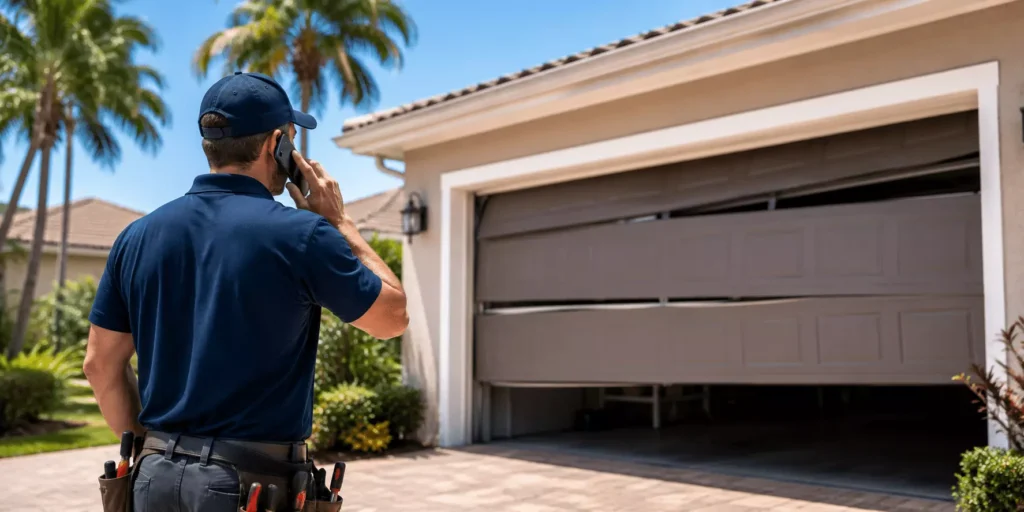
Our team handles garage door roller repair in Fort Myers and full noise tune-ups. We are Florida licensed and insured, serving Lee County since 2009.
If the noise traces to a spring, track, or opener issue, we fix it on the same visit. Stuck after hours? Our 24/7 emergency line stays open.
Frequently Asked Questions
Why does my garage door squeak so loudly?
It almost always means dry, metal-on-metal parts. Lubricate the rollers, hinges, and springs, and the squeak usually stops.
What is the best lubricant for a garage door?
A silicone-based spray or white lithium grease works best. Avoid WD-40, since it is a cleaner and not a real lubricant.
Can I use WD-40 on my garage door?
Use it only to clean off grime, not to lubricate. Follow up with a proper silicone or lithium product for lasting quiet.
Why is my garage door still noisy after lubricating?
The rollers may be worn, or the hardware is loose. Check for cracked rollers and tighten the nuts and bolts.
How often should I lubricate my garage door?
Every six months in Fort Myers, since salt air and humidity speed up rust. Drier climates can stretch to once a year.
What does a grinding garage door mean?
Usually worn rollers or a misaligned track. If it continues after lubricating, a pro should inspect the rollers and tracks.
Is a noisy garage door dangerous?
A squeak is usually minor, but a loud bang can mean a broken spring. Stop using the door and call a pro for that sound.